In Burgundy, wine is not what you drink with dinner. It is dinner — or at least its most essential ingredient. The great dishes of Bourgogne (Burgundy) are built around wine in a way that no other French region can match: beef braised for hours in Pinot Noir, chicken simmered in the same, eggs poached in red wine sauce, and even a dessert tradition that incorporates marc. If Provence cooks with olive oil and Normandy with cream, Burgundy cooks with wine — confidently, lavishly, and to magnificent effect.
But Burgundy is more than its vineyards. It is also the mustard capital of France (Dijon), the snail capital (the entire region), a cheesemaking powerhouse (Époisses, Cîteaux, Brillat-Savarin), and the home of a cooking tradition that balances rustic generosity with a technical refinement born from centuries of monastic and aristocratic patronage.
The Dukes of Burgundy, who in the fourteenth and fifteenth centuries rivalled the kings of France in wealth and power, set a standard for the table that persists. And the great monastic orders — Cluny, Cîteaux — developed agricultural and winemaking practices that shaped the landscape of flavour itself.
Cooking with Wine: The Burgundian Philosophy
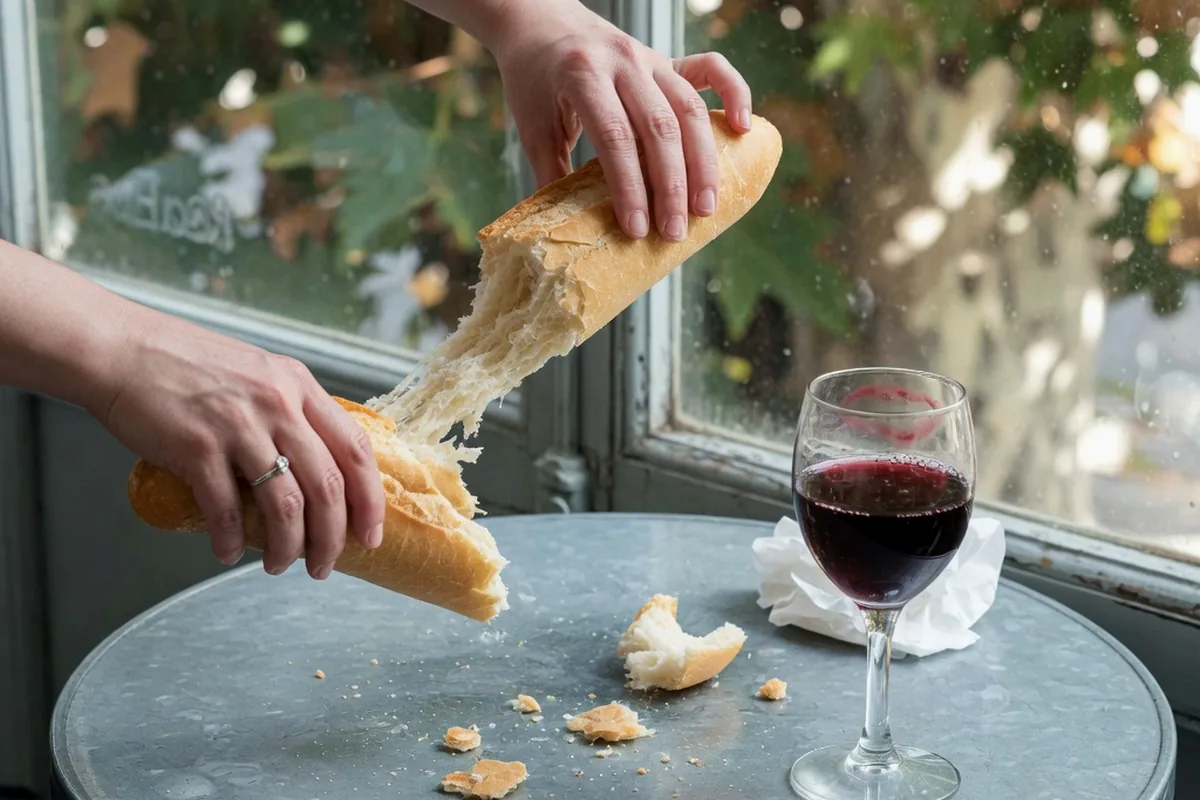
In most French regions, wine accompanies food. In Burgundy, wine is food — an ingredient as fundamental to the local cuisine as the butter in Normandy or the olive oil in Provence. The philosophy is simple: if your land produces some of the greatest wine in the world, it would be wasteful — indeed, almost sinful — not to cook with it.
This does not mean pouring Grand Cru Romanée-Conti into your stew. Burgundian cooks use good, honest village-level wine for braising — a Bourgogne Rouge or a Côtes de Beaune — and save the great bottles for drinking alongside the finished dish. The rule of thumb: cook with wine you would happily drink, but not with wine that would make you weep to see it reduced.
The Technique of Wine Braising
Burgundian wine cooking follows a pattern:
- Brown the protein — deeply, to develop a flavourful crust
- Build the aromatics — onions, carrots, garlic, herbs (bouquet garni (bundle of herbs))
- Deglaze and add wine — a full bottle (or more) of red Burgundy
- Simmer slowly — for hours, until the wine reduces and concentrates into a dark, glossy sauce
- Finish — with beurre manié (kneaded butter and flour) or a final knob of butter for richness and shine
The result — a sauce of extraordinary depth, concentrated fruitiness, and silky texture — is the signature of Burgundian cooking.
The Great Dishes
Boeuf Bourguignon
Boeuf bourguignon (beef braised in red Burgundy wine) is Burgundy's most famous dish and one of the defining preparations of all French cuisine. Cubes of beef (traditionally paleron (blade/chuck steak) or macreuse (braising steak)) are marinated overnight in red wine with aromatics, then browned deeply and braised with the marinade, enriched with lardons, pearl onions (oignons grelots (small peeling onions)), and mushrooms.
The dish requires patience. A minimum of three hours of gentle simmering is needed for the beef to become fork-tender and the wine to reduce into a sauce of extraordinary concentration. Many cooks insist it is better the next day, when the flavours have had time to marry.
Julia Child's recipe in Mastering the Art of French Cooking did more than any other to popularise boeuf bourguignon in the English-speaking world. Her insistence on proper browning, good wine, and sufficient cooking time established the standard that home cooks worldwide still follow.
Wine pairing: A village Burgundy — Givry, Mercurey, or Santenay — with enough structure to match the richness of the sauce.
Coq au Vin
Coq au vin (rooster braised in red wine) is the poultry counterpart to boeuf bourguignon — and originally it was more challenging, because a true coq (rooster) (an old, tough male bird) requires much longer cooking than a modern chicken. The dish was a way of making something magnificent from a bird past its laying or breeding prime.
The rooster (or, in modern practice, a free-range chicken) is jointed, marinated in red wine, then braised with lardons, mushrooms, pearl onions, and a splash of cognac. The sauce is thickened with the bird's blood in the most traditional versions — a technique called lier au sang (thicken with blood) — though modern cooks typically use beurre manié.
The result should be deeply flavoured, the meat falling from the bone, the sauce dark and wine-rich. Serve with steamed potatoes or fresh tagliatelle to catch every drop.
Oeufs en Meurette
Oeufs en meurette (poached eggs in red wine sauce) is one of Burgundy's most distinctive dishes — and one that surprises many first-time visitors. Eggs poached gently in red wine broth, served on croutons fried in butter, napped with a silky sauce meurette (Burgundian red wine sauce with lardons and onions) made from reduced red wine, shallots, lardons, and a knob of butter.
The combination sounds improbable but is sublime. The yolk enriches the wine sauce when broken, creating a kind of impromptu burgundy-coloured hollandaise. This is a standard first course in Burgundian restaurants, and an extraordinary brunch dish.
Escargots de Bourgogne
Escargots de Bourgogne (Burgundy snails baked in garlic-parsley butter) are one of France's most iconic dishes — and most of the world's introduction to eating snails. The Burgundy snail (Helix pomatia, the large vineyard snail) is purged, cooked, then packed back into its shell with a compound butter of garlic, parsley, and shallots (beurre d'escargot (snail butter) or beurre bourguignon (Burgundian butter)). The shells are arranged in dimpled escargotières (snail plates) and baked until the butter bubbles and the kitchen fills with the scent of garlic.
The pleasure is in the contrast: the mild, slightly chewy texture of the snail against the intensely flavoured, sizzling butter. Bread for dipping is essential — wasting the butter would be a crime.
A note on sustainability: Wild Helix pomatia populations have declined dramatically, and most "Burgundy" snails served in French restaurants now originate from Eastern Europe or are farmed. This is a source of regret and increasingly a focus of local conservation and farming efforts.
Jambon Persillé
Jambon persillé (parslied ham terrine) is Burgundy's charcuterie masterpiece — a terrine of ham hock and pork shoulder, slow-cooked until tender, then shredded and set in its own reduced cooking liquor (enriched with white wine, white wine vinegar, and vast quantities of chopped parsley). The result, when unmoulded and sliced, is a mosaic of pink meat and green parsley in a clear, savoury jelly.
Jambon persillé is traditionally eaten at Easter but appears year-round in Burgundian charcuteries (delicatessens) and restaurants. It is the ideal starter — light enough not to overwhelm the courses to come, complex enough to be genuinely interesting.
Gougères
Gougères (Burgundian cheese puffs) are Burgundy's answer to the apéritif snack — small choux pastry puffs enriched with Gruyère or Comté cheese, baked until golden and hollow, and served warm. They are the traditional accompaniment to a glass of Burgundy at wine tastings, in wine cellars, and at every Burgundian party.
The dough is simple — pâte à choux (choux pastry dough) with cubed cheese folded through — but the execution matters. The exterior should be crisp and golden, the interior airy and fragrant with cheese. They deflate quickly and should be eaten within minutes of leaving the oven.
| Classic Burgundian Dishes & Their Wine Pairings | Detail |
|---|---|
| Boeuf bourguignon (wine-braised beef) — pair with Givry, Mercurey, or Côte de Beaune-Villages (red) | |
| Coq au vin (chicken in wine) — pair with Nuits-Saint-Georges or Volnay (red) | |
| Oeufs en meurette (poached eggs in red wine sauce) — pair with Irancy or Bourgogne Pinot Noir (lighter red) | |
| Escargots de Bourgogne (snails in garlic butter) — pair with Chablis or Aligoté (white) | |
| Jambon persillé (parslied ham terrine) — pair with Bourgogne Aligoté or Crémant de Bourgogne (sparkling) | |
| Gougères (cheese puffs) — pair with any Burgundy — made to be eaten while tasting | |
| Pochouse (freshwater fish stew in white wine) — pair with Pouilly-Fuissé or Saint-Véran (white) | |
| Époisses (washed-rind cheese) — pair with Gevrey-Chambertin or aged white Burgundy |

Dijon: Mustard Capital of the World
Moutarde de Dijon (Dijon mustard) is not merely a condiment — it is a cultural institution. The city of Dijon has been making mustard since at least the fourteenth century, when the Dukes of Burgundy granted the city's mustard-makers exclusive privileges. By the eighteenth century, Dijon had dozens of moutardiers (mustard makers), and the city's mustard was famous across Europe.
True Dijon mustard is made from brown mustard seeds, verjus (juice of unripe grapes) (the juice of unripe grapes) or wine vinegar, and salt. It is smooth, sharp, and deeply flavoured — worlds apart from the yellow ballpark mustard of America or the sweet German varieties. The heat is immediate and nasal, clearing the sinuses with a wasabi-like intensity.
Maille and Fallot
Two houses dominate Dijon mustard:
- Maille (Maille — heritage Dijon mustard house, established 1747) — established in 1747, now owned by Unilever but still operating a boutique on the Rue de la Liberté in Dijon where mustards flavoured with truffle, Chablis, or blackcurrant are dispensed from ceramic pots
- Fallot (Fallot — independent artisan mustard maker in Beaune) — the last independent family-owned mustard maker in Burgundy, based in Beaune, still grinding seeds on traditional stone mills. Their moutarde en grains (whole-grain mustard) (whole-grain mustard) is magnificent
Mustard in Burgundian Cooking
Dijon mustard appears everywhere in Burgundian cuisine:
- In the coating for lapin à la moutarde (rabbit with mustard sauce) — rabbit roasted in a mustard-cream sauce
- As the finish for sauce dijonnaise (Dijon mustard sauce) — a creamy mustard sauce for fish or chicken
- On the side of every plate of charcuterie and every bowl of pot-au-feu (boiled beef)
- In salad dressings — a vinaigrette à la moutarde (mustard vinaigrette) is standard
Pain d'Épices
Pain d'épices (spice bread (gingerbread)) — spice bread — has been a Dijon speciality since the Middle Ages. The Burgundian version, richer and more complex than the Alsatian equivalent, is made with honey, rye flour, and a blend of spices (ginger, cinnamon, anise, nutmeg, clove) that varies by maker.
The most famous producer is Mulot et Petitjean (Mulot et Petitjean — Dijon's legendary pain d'épices maker, since 1796), which has been making pain d'épices in Dijon since 1796. Their shop on the Place Bossuet is a fragrant temple to the art.
Pain d'épices is eaten sliced, sometimes toasted, sometimes spread with butter, and increasingly used in savoury preparations — crumbled as a coating for foie gras, for instance, or as a base for canapés.
The Cheeses of Burgundy
Époisses

Époisses (Burgundy's legendary washed-rind cheese) is Burgundy's most famous — and most pungent — cheese. A washed-rind cow's milk wheel from the village of the same name, it is bathed repeatedly in marc de Bourgogne (Burgundian grape brandy) during its aging, developing a sticky, orange-red rind and an extraordinary aromatic intensity.
The interior, when properly aged (five to six weeks minimum), is a spoonable cream of remarkable complexity — earthy, barnyardy, salty, and somehow sweet all at once. It is reputedly banned from public transport (though this may be apocryphal — the smell would certainly clear a carriage).
Brillat-Savarin, the great gastronome, called Époisses "the king of cheeses" — and he was a Burgundian himself, born in Belley.
Cîteaux
Fromage de Cîteaux (Cîteaux — monastic cheese from the Cistercian abbey) is produced by the monks of the Abbey of Cîteaux, the founding house of the Cistercian order. This semi-soft, washed-rind cheese has a milder, nuttier flavour than Époisses and is produced in very small quantities — it sells out quickly and is best found at the abbey itself or at the Dijon market.
Brillat-Savarin
Brillat-Savarin (triple-cream cheese named after the gastronome) — a triple-cream cheese (75% butterfat) named after the famous gastronome — is luxuriously rich and buttery, with a bloomy white rind. It is the cheese equivalent of eating cream with a spoon.
Chaource and Soumaintrain
Chaource (soft, bloomy-rind cheese from northern Burgundy) (AOC) is a soft, bloomy-rind cheese from the northern edge of Burgundy, with a chalky centre that becomes creamily liquid as it ripens. Soumaintrain (washed-rind cheese from the Yonne) is a washed-rind cousin of Époisses, from the Yonne department, with a slightly less aggressive personality.
Other Burgundian Specialities
Pochouse
Pochouse (Burgundian freshwater fish stew in white wine) (also spelled pôchouse) is Burgundy's freshwater answer to bouillabaisse — a stew of river fish (pike, perch, eel, carp, tench) simmered in white Burgundy with garlic, onions, lardons, and cream. It is a speciality of the Saône river towns, particularly Verdun-sur-le-Doubs, which holds an annual fête de la pochouse (pochouse festival).
Kir
Kir (white wine with blackcurrant liqueur) — the classic Burgundian apéritif — is a glass of Aligoté (Burgundy's second white grape, used for kir) (Burgundy's workhorse white wine) topped with a dash of crème de cassis (blackcurrant liqueur) from Dijon. The drink was popularised by Canon Félix Kir, the mayor of Dijon, who served it at official receptions. When made with Crémant de Bourgogne (sparkling wine) instead of Aligoté, it becomes a Kir Royal (sparkling wine with blackcurrant liqueur).
Nonettes
Nonettes (small round spice cakes filled with orange marmalade) are small, round spice cakes — like miniature pain d'épices — filled with orange marmalade. They take their name from the nuns (nonnettes (young nuns)) who are said to have created them.
Where to Eat
Dijon
- DZ'envies — contemporary Burgundian cooking in a bistro setting; excellent wine list
- Chez Léon — a bouchon-style restaurant near Les Halles; jambon persillé, oeufs en meurette, and honest Burgundy reds
- Le Pré aux Clercs — refined Burgundian classics on the Place de la Libération
Beaune
- Ma Cuisine — the legendary wine-bar restaurant near the Hospices; tiny, packed, and essential. The wine list is encyclopaedic
- Le Bistro de l'Hôtel — at the Hôtel-Dieu; classic Burgundian fare with a view of the famous hospice
- Loiseau des Vignes — part of the Loiseau empire; superb wine-by-the-glass programme paired with Burgundian dishes
The Countryside
- Auberge de l'Atre (Quarre-les-Tombes) — log fires, game, escargots, and the cooking of a region untouched by fashion
- Restaurant Greuze (Tournus) — refined Burgundian cuisine in a handsome Mâconnais town
Seasonal Eating in Burgundy
- Spring: Gougères (cheese puffs) with the first Aligoté of the year; jambon persillé at Easter; sorrel soup; asparagus from the Saône plain
- Summer: Fresh goat cheeses; cassis (blackcurrant) harvest for crème de cassis; river fish for pochouse; garden salads with mustard vinaigrette
- Autumn: The vendange (grape harvest) dominates; wild mushrooms (cèpes, girolles); game season opens; chestnuts from the Morvan
- Winter: Boeuf bourguignon and coq au vin come into their own; Époisses is at its strongest; the Vente des Vins (Hospices de Beaune wine auction) at the Hospices de Beaune (third Sunday of November) is the social and gastronomic event of the year
Recommended Reading
- My Life in France by Julia Child — her discovery of Burgundian food (beginning with that famous sole meunière in Rouen, followed by years of exploring French gastronomy). View on Amazon UK
- The Food Lover's Guide to Wine by Karen Page & Andrew Dornenburg — exceptional on Burgundy wine and food pairings. View on Amazon UK
- Mastering the Art of French Cooking by Julia Child — contains the definitive boeuf bourguignon and coq au vin. View on Amazon UK
- The Wines of Burgundy by Clive Coates MW — essential context for understanding how wine shapes Burgundian food. View on Amazon UK
Dijon & Beaune Guide — Explore the twin capitals of Burgundy — one for mustard and politics, one for wine and history
Burgundy Wine Route — Navigate the Côte d'Or from Dijon to Santenay — the Golden Slope of vineyards and villages
Summary
Burgundian cuisine is wine made edible — a cooking tradition that takes the region's greatest natural asset and braids it through every course, from the kir that opens the meal to the marc that closes it. Add to this the world's most famous mustard, a cheese that could wake the dead, the finest escargots in France, and a landscape of rolling vineyards, medieval abbeys, and market towns where the Sunday market still matters more than the internet, and you have one of France's most complete and satisfying food cultures. Burgundy does not shout about its cuisine. It simply pours another glass and ladles another helping, knowing that the food speaks — eloquently, richly, and with the lingering finish of a great Pinot Noir.