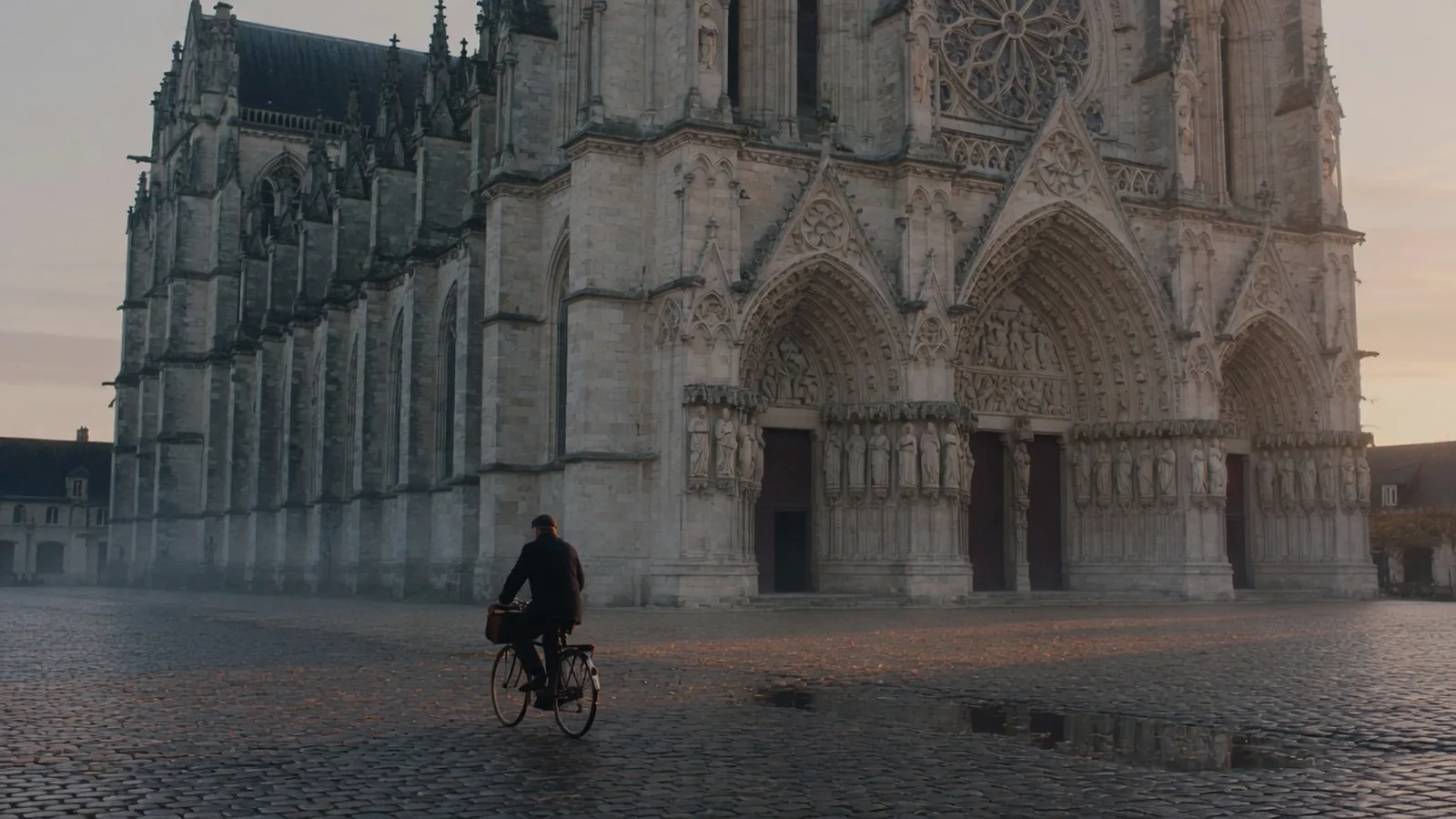
French cooking is not merely a collection of recipes. It is a philosophy — a coherent system of values that places technique above shortcuts, seasonal ingredients above convenience, and the shared meal above solitary eating. To understand French food, you must first understand the ideas that shaped it: the codification of technique by Auguste Escoffier, the reverence for terroir (the taste of place), and the belief that cooking well is an act of civilisation itself.
In 2010, UNESCO inscribed the repas gastronomique des Français (the gastronomic meal of the French) on its Representative List of Intangible Cultural Heritage — the first time any national food culture received such recognition. The honour was not for a particular dish, but for the entire ritual: the careful selection of good products, the pairing of food and wine, the setting of the table, and the structured progression of courses from apéritif (pre-dinner drink) through digestif (after-dinner spirit).
This page traces the philosophical currents that flow beneath every great French kitchen.
The Three Great Traditions
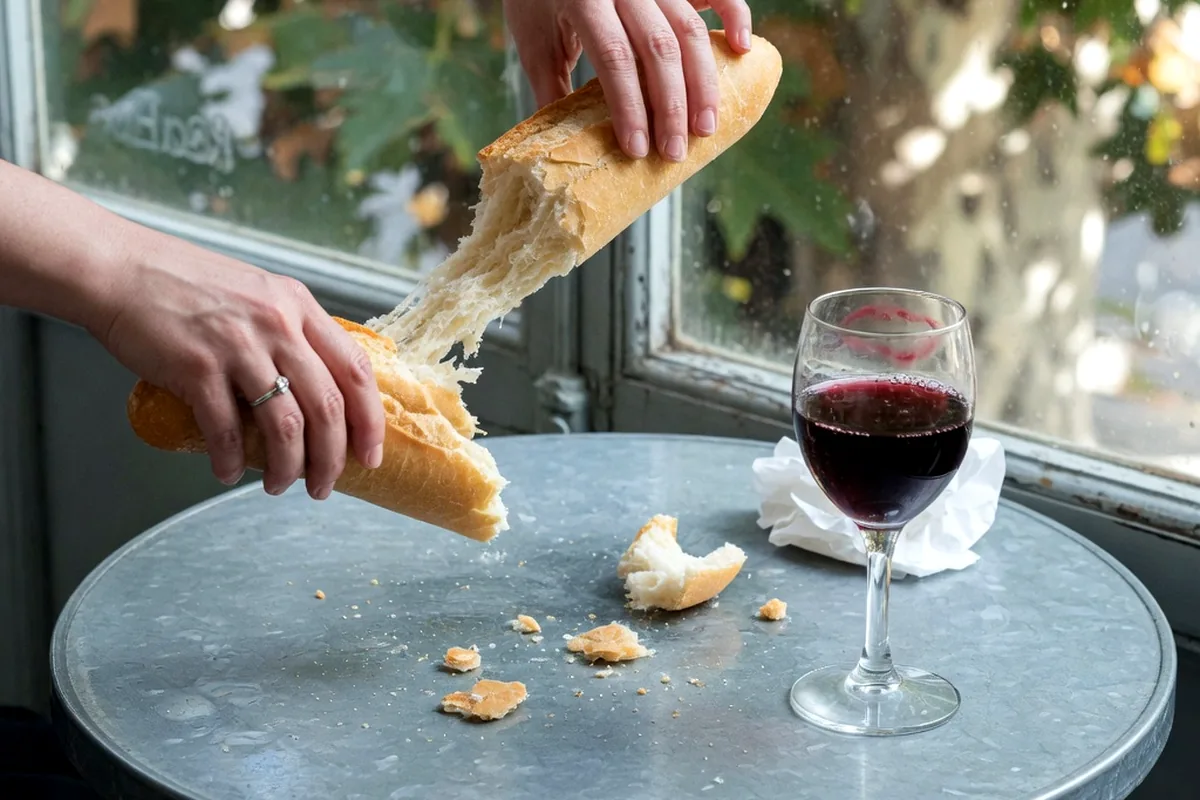
French cuisine is often spoken of as a monolith, but it is more accurately understood as three overlapping traditions, each with a distinct philosophy and audience.
La Grande Cuisine and Haute Cuisine
La grande cuisine (the great cuisine) emerged from the royal courts and aristocratic households of the seventeenth and eighteenth centuries. Its ambition was nothing less than perfection: elaborately constructed dishes, architectural presentations, and sauces of extraordinary complexity. This tradition reached its zenith under Marie-Antoine Carême (1784–1833), the first celebrity chef, who codified hundreds of sauces, designed fantastical centrepieces called pièces montées (mounted showpieces), and treated cooking as a branch of architecture.
Haute cuisine (high cooking) remains the direct descendant of this tradition. It lives today in the Michelin-starred restaurants of Paris and the provinces — temples of gastronomy where a brigade of twenty cooks may labour for hours to produce a single tasting menu. The philosophy is one of relentless refinement: each element on the plate must be technically flawless.
La Cuisine Bourgeoise
If haute cuisine is the art of the palace, la cuisine bourgeoise (home cooking of the comfortable classes) is the art of the well-run household. This tradition prizes excellent ingredients prepared with skill but without ostentation. A blanquette de veau (veal in white sauce) made by a skilled home cook, a perfectly roasted poulet rôti (roast chicken) with tarragon butter, a slow-simmered pot-au-feu (boiled beef dinner) — these are the dishes of la cuisine bourgeoise.
This tradition was codified not by professional chefs but by writers, most notably Madame Saint-Ange, whose 1927 masterwork La Bonne Cuisine de Madame E. Saint-Ange remains the definitive reference for French home cooking. It is this tradition that most French people mean when they speak of their grandmother's cooking with tearful reverence.
Nouvelle Cuisine
In 1973, food critics Henri Gault and Christian Millau published a manifesto that shook the culinary establishment. Their ten commandments of nouvelle cuisine (new cooking) rejected the heavy sauces, excessive ornamentation, and rigid orthodoxies of classical haute cuisine. In their place they championed lighter preparations, shorter cooking times, seasonal ingredients, and creativity.
The chefs who embodied this revolution — Paul Bocuse, Michel Guérard, the Troisgros brothers, Alain Chapel — were trained in the classical tradition but dared to question it. Bocuse's famous truffle soup, sealed under a puff pastry dome for President Valéry Giscard d'Estaing in 1975, was simultaneously a tribute to classical technique and a declaration of creative freedom.
Nouvelle cuisine was frequently mocked for small portions and visual pretension, but its influence was permanent. Every modern French kitchen operates under principles it established: respect for the ingredient, restraint in saucing, attention to visual composition.
| Key Milestones in French Culinary History | Detail |
|---|---|
| 1651 — La Varenne publishes Le Cuisinier françois, the first modern French cookbook | |
| 1765 — Boulanger opens what is considered the first restaurant in Paris | |
| 1784–1833 — Carême codifies la grande cuisine and the architectural style | |
| 1903 — Escoffier publishes Le Guide Culinaire, reorganising professional kitchens forever | |
| 1920s — Curnonsky popularises regional cooking and the phrase "cuisine is when things taste of what they are" | |
| 1927 — Madame Saint-Ange publishes her definitive bourgeois cooking manual | |
| 1965 — Paul Bocuse receives three Michelin stars and never loses them | |
| 1973 — Gault & Millau publish the nouvelle cuisine manifesto | |
| 2010 — UNESCO inscribes the French gastronomic meal as Intangible Cultural Heritage | |
| 2018 — The movement toward cuisine bistronomique (bistro-level fine dining) redefines accessible excellence |

Auguste Escoffier and the Brigade System
No single figure shaped modern professional cooking more than Auguste Escoffier (1846–1935). A disciplined, methodical man from the village of Villeneuve-Loubet near Nice, Escoffier transformed the professional kitchen from a chaotic, often brutal place into an organised, efficient machine.
The Brigade de Cuisine
Escoffier's brigade de cuisine (kitchen brigade) divided the kitchen into specialised stations, each with a clearly defined role. This system, modelled loosely on military organisation, eliminated the duplication and confusion that plagued earlier kitchens.
The key positions in a classical brigade:
- Chef de cuisine (head chef) — overall command and menu creation
- Sous-chef de cuisine (under-chef) — second in command, coordinates the line
- Chef de partie (station chef) — heads a specific section (sauces, fish, roasts, pastry, etc.)
- Saucier (sauce cook) — the most skilled station, responsible for all sauces and sautéed dishes
- Poissonnier (fish cook) — all fish preparations
- Rôtisseur (roast cook) — roasted and fried items
- Pâtissier (pastry chef) — desserts, breads, pastries
- Garde manger (cold kitchen chef) — cold preparations, terrines, salads, charcuterie
- Commis (junior cook) — apprentice working under a chef de partie
The brigade system survives in professional kitchens worldwide. When a French cook calls out Oui, chef! (Yes, chef!), they are echoing a tradition Escoffier formalised over a century ago.
Le Guide Culinaire
Escoffier's 1903 masterwork, Le Guide Culinaire, catalogued over 5,000 recipes and established the organisational framework that professional cooking still follows. More importantly, it codified the sauces mères (mother sauces) — the foundational sauces from which all others derive.
The Five Mother Sauces
The sauces mères (mother sauces) are the bedrock of French culinary education. Master these five, and you possess the vocabulary to create hundreds of derivative sauces.
- Béchamel (white sauce) — milk thickened with a white roux (butter-and-flour paste). The basis for cheese sauces, gratins, and soufflés.
- Velouté (velvety sauce) — a light stock (chicken, veal, or fish) thickened with a blond roux. The starting point for supreme sauce and allemande.
- Espagnole (brown sauce) — a dark stock with tomato and brown roux. When reduced with additional stock, becomes demi-glace (half-glaze), the backbone of classical meat sauces.
- Sauce tomate (tomato sauce) — the French version is often enriched with pork or veal stock, giving it depth beyond the Italian-style equivalent.
- Hollandaise (butter-and-egg-yolk emulsion) — a warm emulsion of butter and egg yolk, sharpened with lemon. The parent of béarnaise, choron, and mousseline sauces.
Beyond the mother sauces, certain preparations carry almost mythical status in French kitchens: beurre blanc (white butter sauce) from the Loire Valley, beurre noisette (brown butter), and the cold emulsion of aïoli (garlic mayonnaise) from Provence.
Terroir: The Taste of Place
No concept is more central to French food philosophy than terroir (the taste of place). Originally a wine term describing how soil, climate, and microclimate give each vineyard a unique character, terroir has expanded to encompass all food production.
A Bresse chicken tastes different from any other chicken because of the specific grasses, insects, and grains of the Bresse region — and because French law (via the Appellation d'Origine Contrôlée (protected designation of origin) system) mandates exactly how these birds must be raised. A Camembert from Normandy made with raw milk from Norman cows grazing on Norman pastures is not the same product as an industrially produced Camembert, even if both carry the same name.
This philosophy extends to every corner of French food culture:
- Salt from Guérande is hand-harvested from Atlantic marshes
- Lentils from Le Puy grow in volcanic soil at altitude
- Walnuts from Grenoble ripen in alpine valleys
- Butter from Charentes-Poitou or Normandy carries AOC protection
The terroir philosophy is fundamentally opposed to industrial food production. It insists that where and how something is grown matters as much as what it is.
The Art of Technique
French cooking education is built on technique before recipes. A student at a French cooking school will spend weeks practising knife cuts before touching a stove:
- Julienne (matchstick cut) — 3mm × 3mm × 5cm batons
- Brunoise (fine dice) — 3mm × 3mm × 3mm cubes (julienne cut crosswise)
- Chiffonade (ribbon cut) — fine shreds of leafy herbs or greens
- Concasser (rough chop) — peeled, seeded, roughly chopped tomatoes
- Tourner (to turn) — carving vegetables into uniform barrel shapes
The principle of mise en place (everything in its place) — having all ingredients prepared, measured, and arranged before cooking begins — is treated not as a convenience but as a moral imperative. A cook who begins without proper mise en place is a cook courting disaster.
The Role of Stock
Nothing separates French professional cooking from amateur cooking more decisively than stock. A well-made fond (stock/foundation) — whether fond blanc (white stock) from veal bones, fond brun (brown stock) from roasted bones, or fumet de poisson (fish stock) from sole bones and aromatics — provides the invisible foundation upon which sauces, braises, and soups are built.
Classical French stock-making is a slow, meditative process. A great fond brun de veau (brown veal stock) may simmer for eight hours. This patience — the willingness to invest time in a product that will never be tasted directly — is the essence of French culinary philosophy.
Seasonal Cooking: The Calendar of the Table
French cooking follows the seasons with an almost religious devotion. The great markets of France — the Marché d'Aligre in Paris, the Marché Forville in Cannes, Les Halles de Lyon — change their character entirely with the calendar:
- Spring brings asperges (asparagus), petits pois (young peas), morel mushrooms, and the first strawberries from Plougastel
- Summer arrives with tomatoes, courgettes, haricots verts (green beans), peaches, and the stone fruits of the Rhône valley
- Autumn is the season of game (gibier (wild game)), wild mushrooms (cèpes, chanterelles, trompettes de la mort), walnuts, and the grape harvest
- Winter demands hearty braises, root vegetables, choux (cabbage), and the great preserved foods: confit, rillettes, and cassoulet
A French cook who serves asparagus in December or game in July has failed a basic philosophical test. The constraint of seasonality is not a limitation but liberation — it forces creativity within the natural rhythms of the land.
The UNESCO Heritage: Le Repas Gastronomique
The 2010 UNESCO inscription recognised not a recipe or a restaurant but a ritual. The repas gastronomique (gastronomic meal) follows a precise structure:
- Apéritif (pre-dinner drink) — often kir, champagne, or pastis, with small nibbles
- Entrée (starter) — a light first course
- Plat principal (main course) — meat or fish with accompaniments
- Fromage (cheese course) — before dessert, always
- Dessert (dessert) — sweet course
- Digestif (after-dinner spirit) — calvados, armagnac, or cognac
The meal also encompasses the social rituals: the careful matching of wine to food, the art of conversation, the pleasure of lingering at table. In France, a Sunday lunch with family may begin at noon and conclude at four in the afternoon. This is not indulgence — it is culture.
Paris City Guide — Discover the restaurants, markets, and food districts of the French capital
Modern French Cooking: Where Philosophy Meets the Present
Contemporary French cuisine is in a state of creative ferment. The rigid hierarchies of Escoffier have loosened. The dominance of butter and cream has yielded to global influences — Japanese precision, North African spice, Scandinavian minimalism. Yet the underlying philosophy endures.
The movement known as bistronomie (bistro-level fine dining) — coined to describe chefs who bring three-star technique to casual neighbourhood restaurants at accessible prices — may be the most authentic expression of French culinary philosophy in the twenty-first century. Chefs like Yves Camdeborde, Inaki Aizpitarte, and the late Alain Passard have demonstrated that the principles of terroir, technique, and seasonal fidelity need not be wrapped in white tablecloths and silver service.
Recommended Reading
For those wishing to deepen their understanding of French culinary philosophy, these essential volumes serve as both reference and inspiration:
- Larousse Gastronomique — the essential encyclopaedia of French cooking. View on Amazon UK
- Mastering the Art of French Cooking by Julia Child — the book that taught the English-speaking world to cook French. View on Amazon UK
- Le Guide Culinaire by Auguste Escoffier — the foundational text. View on Amazon UK
- The French Menu Cookbook by Richard Olney — philosophy meets practical menu composition. View on Amazon UK
Summary
The philosophy of French cooking rests on a few interconnected beliefs: that good food begins with good ingredients; that technique, learned through repetition, is the foundation of culinary freedom; that the table is a place of civilised pleasure; and that every meal is an opportunity to honour the land, the season, and the people gathered together. These ideas have shaped not only French cuisine but the entire global vocabulary of cooking. To cook French is to inherit a conversation that has been running, course by course, for more than four hundred years.