Bread in France is not a side dish. It is a structural element of the meal, a cultural marker, and a daily necessity. The baguette is not just bread but an identity — France bakes an estimated 6 billion baguettes per year, and the baguette de tradition française (a legally defined artisanal baguette) was inscribed on UNESCO's Intangible Cultural Heritage list in 2022. Treating bread correctly at a French table is a small act of cultural fluency that signals respect for the meal and the people sharing it.
The Daily Bread
The Baguette Ritual
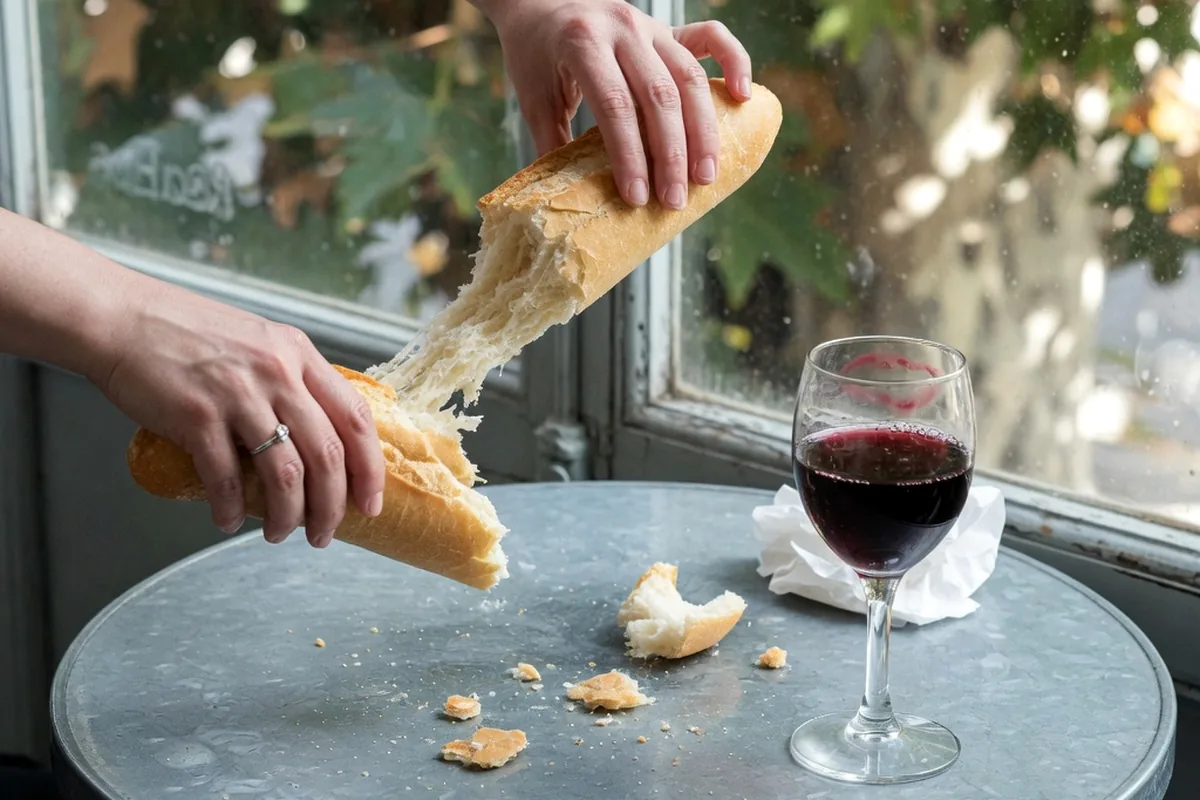
The daily purchase of bread is one of the last universally observed rituals in French life. The pattern is fixed:
- Morning: Bread is bought fresh from the boulangerie (bakery) — usually a baguette tradition or a pain de campagne (country-style bread). The morning baguette serves breakfast (tartines with butter and jam, or simply torn and dipped in café au lait).
- Lunch: If a baguette was bought in the morning, it is eaten with lunch. If it has gone stale, a fresh one is purchased.
- Evening: Another baguette purchase, specifically for dinner. In households that eat later, the baguette du soir (the evening baguette) is bought on the way home from work.
| Bread by the Numbers | Detail |
|---|---|
| The average French person consumes approximately 120g of bread per day (less than the 900g daily figure of 1900, but still substantial). | |
| France has approximately 33,000 bakeries — one per 1,800 inhabitants. | |
| The baguette tradition must, by law, contain only flour, water, salt, and yeast or leaven. No additives, no freezing. | |
| The Grand Prix de la Baguette de la Ville de Paris is an annual competition in which 200+ bakeries compete. The winner supplies the Élysée Palace for a year. |


Types of French Bread
Not all French bread is baguette. The full spectrum:
- Baguette ordinaire — Standard baguette. Cheaper but may contain additives and improvers.
- Baguette de tradition — Artisanal baguette made with only flour, water, salt, yeast. Legally protected since 1993 (the Décret Pain). This is the one to buy.
- Pain de campagne — Round country loaf. Often includes some whole-wheat or rye flour. Sturdier, lasts longer.
- Pain de mie — Soft sandwich bread. Square, sliced. Used for croque-monsieurs and children's sandwiches.
- Pain complet — Wholemeal bread. Increasingly popular but still a minority choice.
- Pain aux céréales — Multi-grain bread. Seeds and grains.
- Ficelle — A thinner, crispier version of the baguette.
- Pain Poilâne — The round, sourdough country miche made famous by the Poilâne bakery in Paris. Sold by weight, lasts a week.
- Fougasse — A Provençal flatbread, often studded with olives, lardons, or herbs.
Bread Etiquette at the Table
Placement
Bread is placed directly on the tablecloth, to the left of your plate. There is no bread plate in traditional French table setting (though formal restaurants may provide one). Placing bread on the tablecloth is not untidy — it is correct.
Tearing, Not Cutting
Bread is torn by hand, never cut with a knife at the table. You tear a small piece, eat it, then tear another. Tearing is the correct, traditional method. Some historians trace this to medieval purity customs; practically, it produces the right-sized morsel.
When to Eat Bread
- Before the meal: Do not eat bread before the food arrives in a restaurant. The bread basket is not an appetiser. It is there to accompany the meal.
- During courses: Break a piece of bread and use it to eat — for example, to push food onto a fork, to soak up sauce (the sacred saucer (to mop up sauce with bread — a sign of appreciation)), or to eat alongside cheese.
- With the cheese course: Bread is the primary vehicle for cheese.
- Not with your starter (unless it's soup): This is debated, but the traditional view is that bread appears with the main course.
Saucing
The act of saucer (to wipe the plate clean with bread) — using a piece of bread to mop up remaining sauce — is a compliment to the cook. In casual settings, it's universal. At formal tables, opinions diverge: some consider it perfectly acceptable (you're honouring the sauce), others regard it as slightly rustic. The safest approach: impale the bread on a fork rather than holding it in your fingers if you're at a white-tablecloth establishment.
The Bread Basket
The corbeille à pain (bread basket) is communal property. Take what you need, no more. In restaurants, bread is free and unlimited — the basket will be refilled if you empty it. Do not take this as a challenge.
Bread in French Culture
The Legal Protection
The baguette is a legally protected object. The 1993 Décret Pain (the Bread Decree — regulating the use of 'boulangerie' and 'tradition') stipulates that:
- Only a bakery that mixes, shapes, and bakes bread on the premises may use the word boulangerie (bakery).
- The "baguette de tradition française" must contain only flour, water, salt, and yeast or sourdough. No additives, no frozen dough.
These legal protections are unusual and revealing: they treat bread not as a commercial product but as a cultural artifact requiring protection from industrial degradation.
The Price
The baguette has been an informal measure of French inflation for decades. In 1970, a baguette cost 0.39 francs. In 2000, 0.65 euros. In 2025, approximately €1.20–€1.50, with the tradition at €1.30–€1.60. Any significant price increase makes headlines and provokes genuine public anxiety.
UNESCO Recognition
In November 2022, the "artisanal know-how and culture of baguette bread" was added to UNESCO's Representative List of the Intangible Cultural Heritage of Humanity. The citation recognised not just the bread itself but the entire ecosystem: the boulangerie, the daily purchase ritual, the social exchange between baker and customer, and the baguette's role in structuring French daily life.
Bread & Baguette — The complete guide to French bread varieties — from the baguette tradition to pain Poilâne.
French Daily Life — How bread fits into the rhythms and rituals of everyday French life.