In France, the café is not merely a place to consume beverages. It is a civic institution, a democratic space, and a philosophical proposition: that the act of sitting still, watching the world pass, and nursing a single express (espresso) for an hour and a half is a legitimate — perhaps the most legitimate — use of one's time.
This page explores the café as a dining institution, its relationship to French daily life, and the practical rituals of café-going.
The Café in Daily Life
Morning
The French workday begins at the comptoir. A standing espresso at the neighbourhood café, exchanged with the patron (the owner/boss) in thirty seconds, is the commonest breakfast ritual for workers. Cost: €1.20–€1.80 at the bar. Perhaps accompanied by a tartine (a half-baguette split and buttered) or a croissant.
For a seated breakfast: café crème (espresso with steamed milk) and a croissant or pain au chocolat. This is the petit déjeuner (breakfast), the lightest meal of the French day.
Midday
Many cafés serve a formule du midi (a fixed-price lunch deal) — a set lunch of starter-main or main-dessert, sometimes with a glass of wine, for €12–18. This is the working lunch: quick, satisfying, and one of the best-value meals in France. The plat du jour — the daily special — is invariably the correct choice.
Afternoon
The goûter (afternoon snack, around 4 PM) is the French afternoon break, traditionally for children but increasingly observed by adults. A coffee, a pastry, a pause. The café terrace in the late afternoon sun is one of life's genuine pleasures.
Apéro
The apéritif (the pre-dinner drink) is the most sacred of French café rituals. Between 6 and 8 PM, the terrasses fill. The drinks: pastis, kir, a glass of rosé, a demi (a half-pint of draught beer). Small dishes — olives, peanuts, perhaps some saucisson — appear. The formal meal is still an hour or two away. The apéro is its own event.
Café Etiquette
The Price System
French cafés operate a transparent tiered pricing system, displayed on a board near the entrance:
| Café Pricing Tiers | Detail |
|---|---|
| Au comptoir (at the bar/counter) — Cheapest. Stand and drink. | |
| En salle (seated inside) — Moderate. Table service applies. | |
| En terrasse (on the terrace) — Most expensive. You are paying for the view and the air. |


The price difference is typically €0.50–€1.50 per tier. This is not a surcharge but a structural feature of French café culture, regulated and visible. It explains why the working person drinks at the bar and the flaneur sits outside.
Lingering
You may sit at a French café for as long as you wish on a single drink. This is not mere tolerance but a fundamental right of the café patron. The waiter will not bring you the bill until you ask (l'addition, s'il vous plaît (the bill, please)). The café exists to be occupied. One espresso buys you a seat for as long as you need it.
The Waiter
The French café waiter is a professional, not a student earning tips. The traditional style — brisk, efficient, seemingly indifferent — is not rudeness but professional competence. Do not expect American-style friendliness. Do expect correct, impeccable service. Address your waiter as Monsieur (Sir) or Madame (Madam), never as "garçon" (an outdated and slightly demeaning term, despite what your phrasebook says).
The Terrasse as Public Space
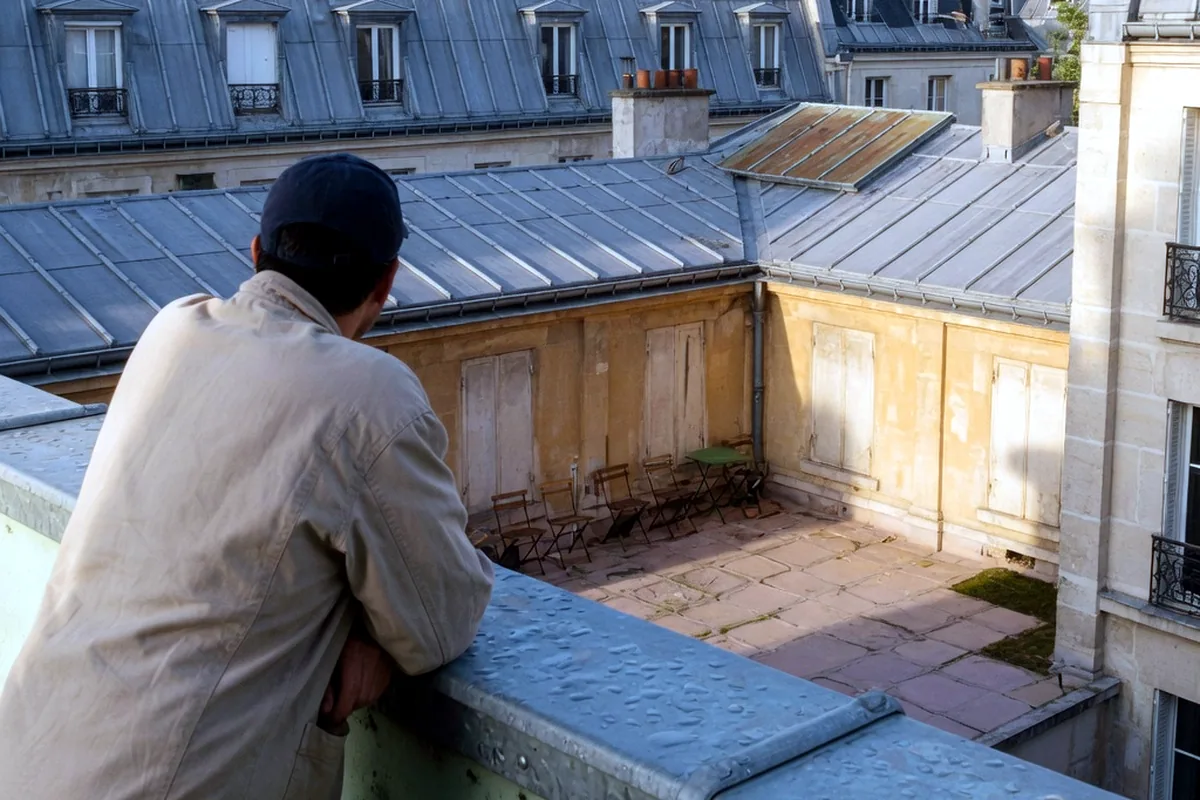
The terrasse (outdoor café seating area) is perhaps the single most distinctive feature of French urban life. In Paris alone, an estimated 12,000 café terrasses line the streets, forming an unbroken chain of outdoor living rooms.
The Rules of the Terrasse
Chairs face outward, toward the street. This is deliberate — the terrasse is for observation. You sit at a café not to retreat from the city but to engage with it at a comfortable remove. Parisians describe this as le spectacle de la rue (the theatre of the street).
Since 2020, expanded Covid-era terrasse permissions have been largely made permanent, with many former parking spaces converted to outdoor dining. The result has been a further blurring of the boundary between public and private space — a development the French, on balance, approve of.
Smoking
Smoking indoors in cafés and restaurants has been banned since 2008. The terrasse, being outdoors, remains a smoking zone. This is non-negotiable for many French café-goers and contributes to the terrasse's popularity.
The Café Across France
Paris dominates the café conversation, but café culture is equally vital in provincial cities and villages:
- Lyon — The bouchon (a traditional Lyonnaise eatery) doubles as café and restaurant. The city's café culture is convivial and unpretentious.
- Marseille — The Vieux-Port (Old Port) terrasses are the city's stage. Pastis is the default order.
- Toulouse — The Place du Capitole is one unbroken terrasse.
- Aix-en-Provence — The Cours Mirabeau, lined with plane trees and cafés, is perhaps France's most beautiful café street.
- Village cafés — In small towns, the café is the community centre: newspaper repository, post-office annexe, debating chamber, and the place where the mayor holds unofficial office hours.
The decline of village cafés — roughly half have closed since the 1960s — is a genuine social crisis. The café de pays (a community café initiative in rural France) movement attempts to reverse this by opening collectively owned cafés in villages that have lost theirs.
Coffee & Café Culture — The drinks side of café culture — how to order, what the options are, and the specialty coffee revolution.
French Social Life — How café culture fits into the broader pattern of French social ritual and community life.