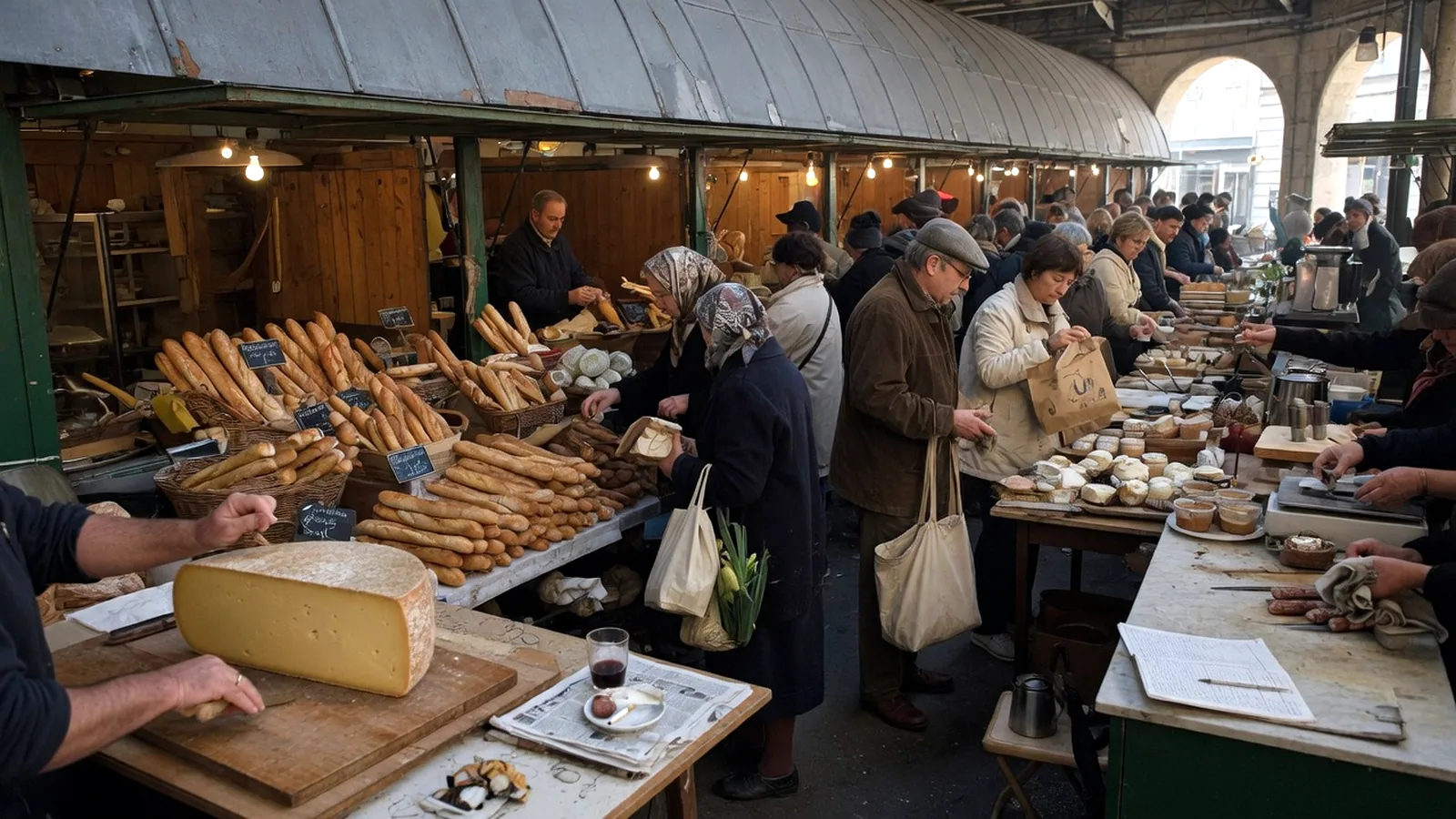
France has restaurants for every occasion, but two types form the backbone of daily eating: the bistro (a small, informal restaurant serving traditional food) and the brasserie (a large, lively restaurant, often serving Alsatian-influenced food and beer). Understanding the difference — and why it matters — is the difference between eating well and eating randomly in France.
There is also a broader taxonomy worth mastering, because the French take their categories seriously. A brasserie is not a bistro. A bistro is not a café. A café is not a restaurant. And none of them is a salon de thé (tearoom).
The Bistro
What It Is
A bistro is a small, informal restaurant serving simple, traditional French food at moderate prices. The word's origin is disputed — the popular myth that it derives from Russian soldiers shouting "bystro!" (quickly!) in Parisian cafés after 1814 is almost certainly wrong, but the French love telling the story anyway.
The defining characteristics:
- Small. Fifteen to forty covers, rarely more.
- Simple menu. A handwritten or chalked ardoise (a slate board used as a menu) is the classic format. Three or four starters, three or four mains, two or three desserts.
- Traditional cooking. Boeuf bourguignon (beef braised in red wine), confit de canard (duck confit), tarte Tatin (upside-down apple tart). Grandmother cooking elevated by careful sourcing and honest technique.
- Modest décor. Chequered tablecloths, zinc bar, paper napkins, cramped seating. Charm is the product of authenticity, not design.
- Wine by the carafe. The pichet (a carafe of house wine) — a small carafe of house wine — is the signature drink.
The Neo-Bistro
Since the 1990s, a movement called bistronomie (the fusion of bistro informality with gastronomic technique) has transformed the landscape. Trained chefs from starred kitchens opened small, affordable restaurants applying fine-dining technique to bistro-priced food. The pioneers:
- Yves Camdeborde at La Régalade (1992) — often credited as the founder of bistronomie.
- Iñaki Aizpitarte at Le Chateaubriand — more avant-garde, but still on a bistro budget.
- Bertrand Grébaut at Septime — now perhaps Paris's most celebrated neo-bistro.
The neo-bistro typically features a tasting menu or menu du marché (daily market menu), natural wines, industrial-chic décor, and a refusal to take reservations (though this last quirk is fading). Prices are higher than a traditional bistro but dramatically lower than starred dining.
The Brasserie
What It Is
A brasserie is larger, louder, and more theatrical than a bistro. The word means "brewery," reflecting the Alsatian origins of many Parisian brasseries (Alsatian immigrants brought beer-drinking culture to Paris in the nineteenth century). The defining characteristics:
- Size. Often a hundred covers or more. Grand rooms, mirrors, brass fittings.
- All-day service. Unlike most French restaurants, brasseries serve continuously from morning through late evening — no closing between lunch and dinner.
- Beer on tap. The brasserie heritage demands it.
- Seafood platters. The plateau de fruits de mer (a tiered platter of raw and cooked shellfish) is the signature dish — a towering architecture of oysters, langoustines, crab, shrimp, winkles, and whelks over crushed ice.
- Classic brasserie dishes. Choucroute garnie (Alsatian sauerkraut with sausages and smoked meats), steak frites, sole meunière, onion soup gratinée.
- Classic waiters. The career garçon de café (waiter — traditionally a formal profession), in black and white, executing choreographed service with practised indifference.
The Great Brasseries of Paris
The historic brasseries are architectural monuments as much as restaurants:
- Bouillon Chartier (9th arr.) — Founded 1896. A cathedral of affordable Parisian dining with ornate Belle Époque interiors and meals under €20.
- Brasserie Lipp (Saint-Germain) — Literary and political haunt since 1880. Presidents, publishers, philosophers.
- La Coupole (Montparnasse) — Art Deco palace, 1927. Picasso, Josephine Baker, Sartre.
- Bofinger (Bastille) — The oldest brasserie in Paris (1864). Stained glass, wood panelling, exceptional choucroute.
- Le Train Bleu (Gare de Lyon) — Railway-station dining as high art. Gilded ceilings, murals, over-the-top opulence.
The Bouillon Revival
A striking recent trend is the return of the bouillon (a historic type of cheap, fast Parisian restaurant) — nineteenth-century workers' canteens serving simple food at rock-bottom prices. Bouillon Chartier never closed, but new bouillons (Bouillon Pigalle, Bouillon République) have opened to enormous popularity, offering three-course meals for €15–20 in grand historic spaces.
The Complete French Dining Taxonomy
| Types of French Dining Establishments | Detail |
|---|---|
| Restaurant — Full table service, set hours, reservations expected. The formal category. | |
| Bistro — Small, informal, traditional food, moderate prices. | |
| Brasserie — Large, all-day service, Alsatian influence, seafood platters. | |
| Bouillon — Historic workers' canteen. Cheap, fast, communal. | |
| Café — Primarily a drinking establishment (coffee, wine, beer). May serve simple food (croque-monsieur, salads). | |
| Bar à vin — Wine bar. Wine is the focus; food is secondary (charcuterie, cheese plates). | |
| Salon de thé — Tearoom. Pastries, light lunch. More refined than a café. | |
| Auberge — Country inn. Rural, often with rooms. Traditional regional cuisine. | |
| Table d'hôte — A communal meal at a private home or guesthouse. Fixed menu, no choice. | |
| Guinguette — An outdoor restaurant/dance hall on a riverbank. Festive, seasonal, deeply nostalgic. | |
| Crêperie — Specialising in crêpes and galettes. Especially Breton. | |
| Traiteur — A prepared-food shop. Takeaway or catering. |


Practical Matters
Reservations
For bistros and brasseries, reserve for dinner but not always necessary for lunch. For neo-bistros, online booking platforms (TheFork, Resy) have replaced the phone. For starred restaurants, book weeks or months ahead.
The Menu vs. La Carte
The menu (a fixed-price set meal, not the list of dishes) is a fixed-price option: starter + main, or main + dessert, or all three. La carte (ordering individual dishes from the full list) means ordering à la carte. The menu is always better value and is what most locals order at lunchtime.
Service Compris
Service is included in all French restaurant bills by law (service compris (service included)). You do not need to tip. Leaving a euro or two in coins is a polite gesture for good service, but 15–20% tips are neither expected nor appropriate.
Where to Eat in Paris — A neighbourhood-by-neighbourhood guide to Paris's best bistros, brasseries, and restaurants.
French Social Customs — Dining etiquette and social rituals around the French table.